An if statement usually creates a 2-to-1 multiplexer, selecting one input if the condition is true, and the other input if the condition is false. if 语句通常会生成一个 2 选 1 多路复用器,条件为真时选择一个输入,条件为假时选择另一个输入。 
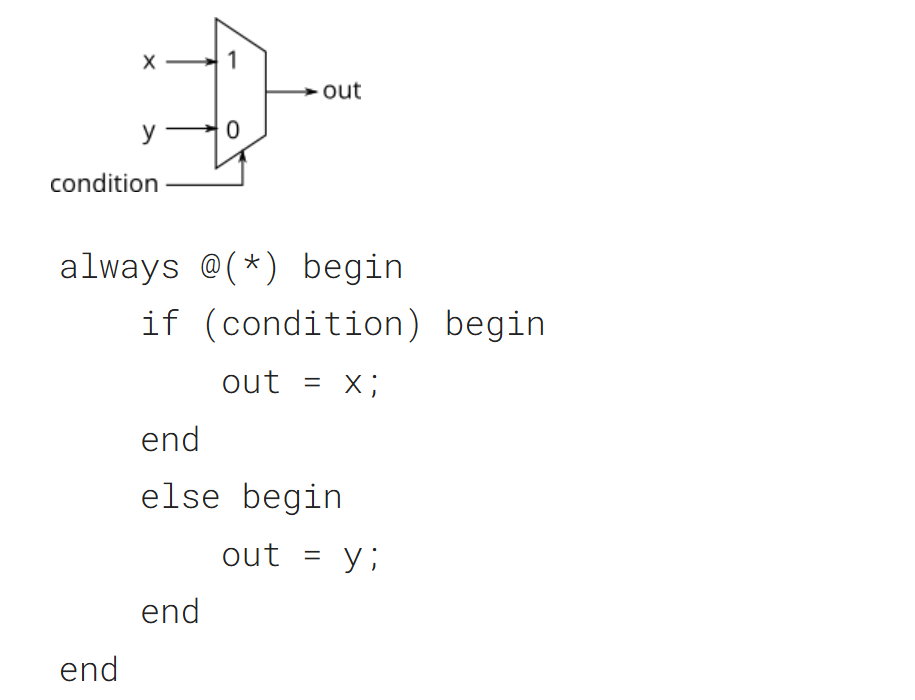 This is equivalent to using a continuous assignment with a conditional operator: 这等效于使用带条件运算符的连续赋值语句:
 However, the procedural if statement provides a new way to make mistakes. The circuit is combinational only if out is always assigned a value. 然而,过程性if语句提供了一种新的犯错方式。只有当out始终被赋值时,该电路才是组合逻辑的。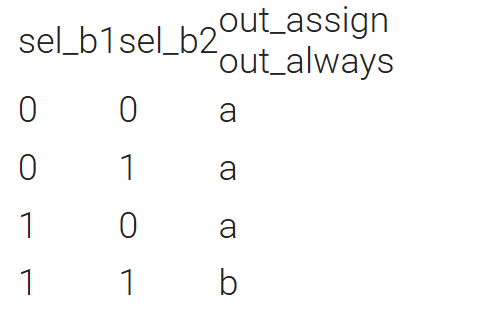
A bit of practice 一点练习
Build a 2-to-1 mux that chooses between a and b. Choose b if both sel_b1 and sel_b2 are true. Otherwise, choose a. Do the same twice, once using assign statements and once using a procedural if statement. 构建一个二选一多路选择器(2-to-1 mux),用于在信号a和信号b之间进行选择。当选择信号sel_b1和sel_b2均为高电平时,选择信号b;否则选择信号a。分两种方式实现:一次使用assign赋值语句,一次使用过程化的if语句。
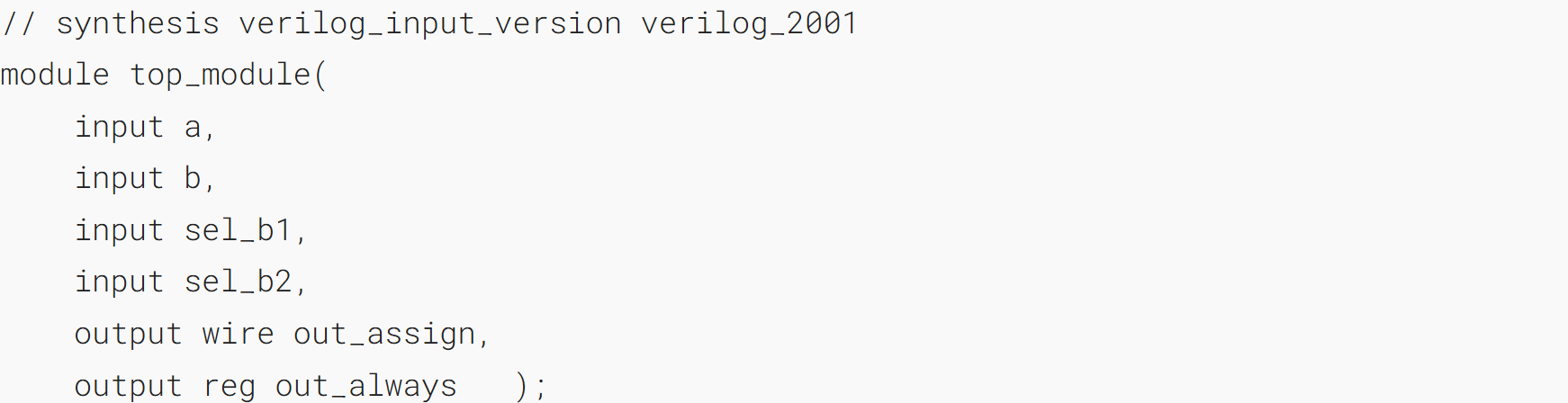
Module Declaration

Write your solution here

Solution
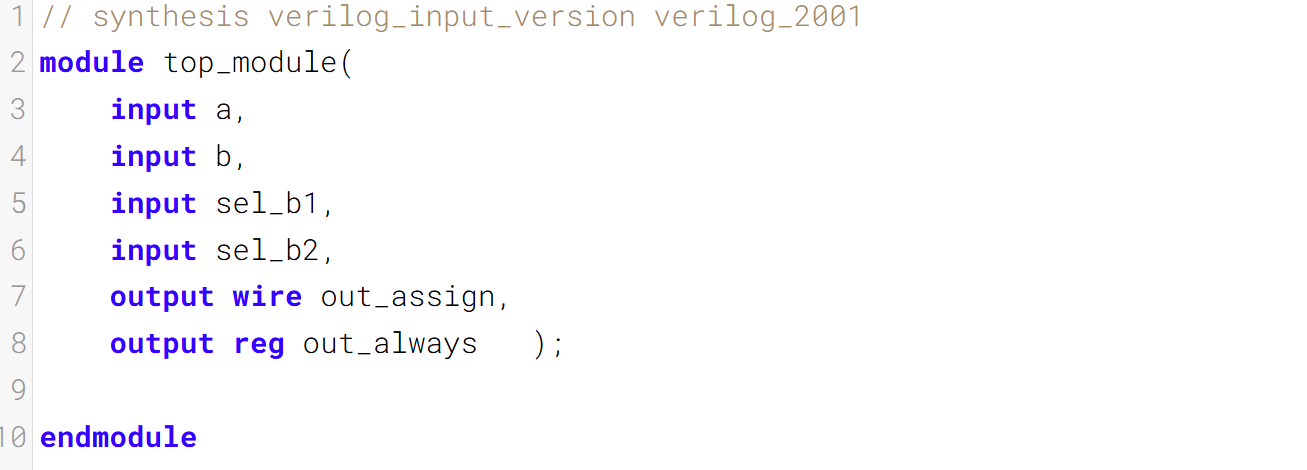
// synthesis verilog_input_version verilog_2001
module top_module(
    input a,
    input b,
    input sel_b1,
    input sel_b2,
    output wire out_assign,
    output reg out_always
);
assign out_assign = (sel_b1 & sel_b2) ? b : a;
always @(*) begin
    if (sel_b1 & sel_b2) begin
    	out_always = b;
    end
    else begin
        out_always = a;
    end
end
endmodule
贡献者
 dz13718198068